
Which balcony detail fails first: the clean railing that starts tea-staining, the warm tile that traps water under a planter, or the outdoor chair whose hidden screw leaves a rust mark? On Al Marjan Island, attractive exterior choices only last when salt exposure is specified, installed, cleaned, and documented from the start.
What does salt air mean for exterior materials on Al Marjan Island?
Salt air on Al Marjan Island should be treated as a marine exposure condition for visible exterior metals, balcony furniture, lighting, fasteners, coatings, sealants, fabrics, and timber-look finishes, where durability depends on tested corrosion resistance, correct installation, drainage, cleaning, and documentation.
A balcony can look clean in the morning and still carry a fine salt film by evening. That film settles on a railing cap, screw head, chair frame, planter foot, or light fitting, then holds moisture against the surface. Heat, humidity, ultraviolet exposure, and trapped water turn a design choice into a maintenance issue.
| Exposure factor | What it does to materials | Specification response |
|---|---|---|
| Salt-laden air | Deposits chlorides on metal, coating edges, joints, and fasteners. | Specify coastal-grade metals, sealed cut edges, compatible fixings, and wash-down access. |
| Humidity and sea breeze | Keeps salt deposits damp for longer, which accelerates staining and corrosion. | Avoid water traps, specify drainage gaps, and require scheduled cleaning. |
| Heat and UV | Fades fabrics, chalks coatings, dries sealants, and heats dark surfaces. | Ask for exterior UV data, coating warranty conditions, and colour maintenance advice. |
| Poor detailing | Creates hidden corrosion at brackets, dissimilar metals, screw penetrations, and planter bases. | Review the whole assembly, not only the visible finish. |
Why do coastal UAE balconies corrode faster than inland balconies?
Coastal UAE balconies corrode faster because salt, moisture, and heat act together. A 2024 paper in Communications Earth & Environment identifies extreme humid heat as a major hazard for the coastal Arabian Peninsula, with evening or nighttime humid-heat maxima widespread along the southern Gulf coastline and linked to sea-breeze movement of moist maritime air.
The same source describes common Arabian Peninsula summer near-surface air temperatures of 45 to 50 °C and Gulf sea-surface temperatures close to 35 °C. Those conditions matter for materials because warm, moist air helps chloride deposits stay active on surfaces. A dry inland balcony may collect dust; a coastal balcony can collect a damp salt layer at joints, corners, and underside details.
Marine exposure should therefore be read as an assembly risk, not a single product risk. Stainless steel can tea-stain if the grade, finish, or cleaning regime is wrong. Powder-coated aluminium can fail at scratches, cut ends, drilled holes, and unsealed interfaces. A good balcony package specifies the metal, coating, pretreatment, fasteners, isolation washers, drainage path, and maintenance schedule together.
Climate data should also guide procurement. NOAA NCEI states that ICOADS provides gridded monthly marine climate summaries and individual marine observations for variables such as wind, humidity, pressure, and air-sea exchange. For larger villa, hospitality, or façade packages, designers should ask suppliers to confirm that warranty assumptions suit a shoreline Gulf setting, not only a generic outdoor setting.
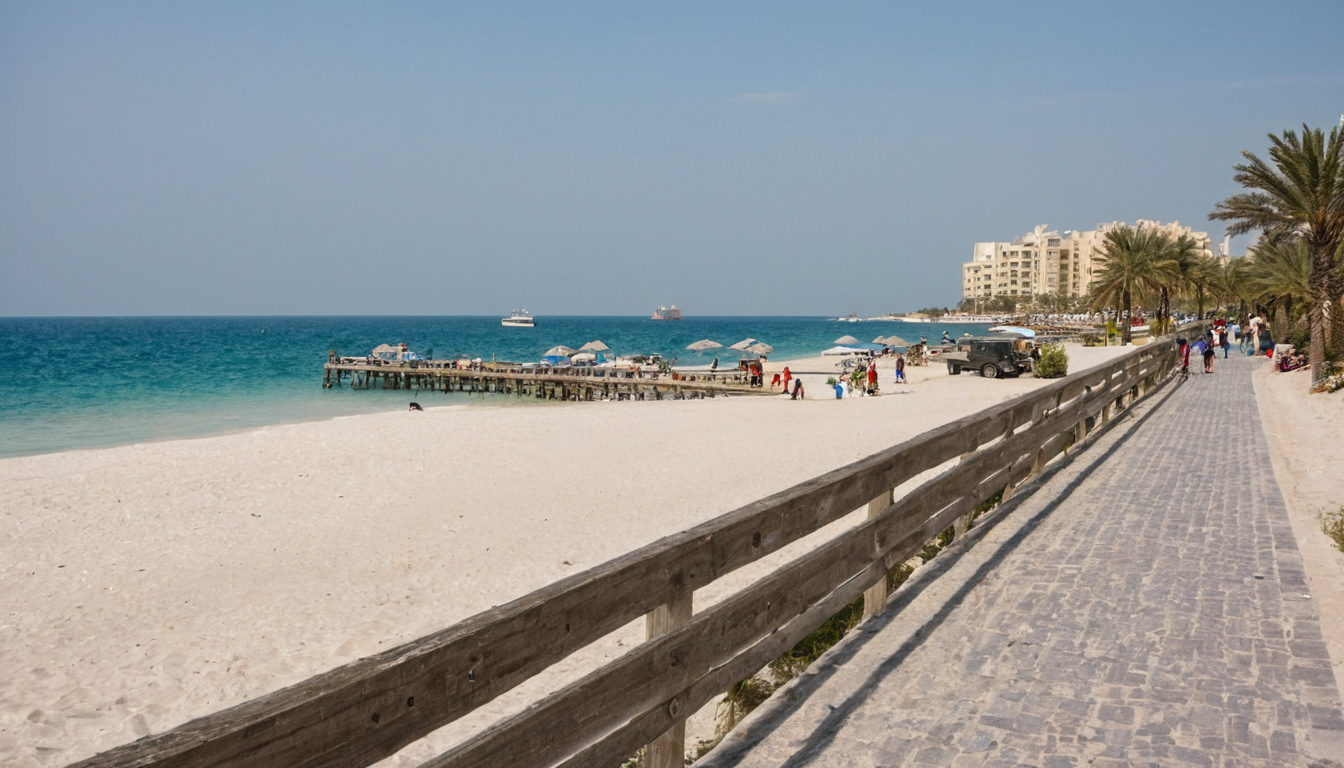
What does salt air mean for exterior materials on Al Marjan Island shown with island travel and transport cues.
Which balcony items are most exposed to salt air on Al Marjan Island?
The most exposed items are the parts readers touch, lean on, move, or wash around: railings, balustrade caps, brackets, screws, hinges, sliding-door hardware, balcony lights, furniture frames, outdoor fabrics, planter bases, privacy screens, decking supports, tile trims, and drain covers. Corrosion often starts at small details because salt gathers where cleaning cloths and rainwater do not reach.
Lighting needs separate attention because energy efficiency does not equal marine durability. ENERGY STAR states that qualified LED lighting uses at least 75 percent less energy and lasts up to 25 times longer than incandescent lighting, where qualified LED products apply. On a coastal balcony, the housing, gasket, screws, cable entry, and IP rating still decide whether the fitting survives salt air.
Visible balcony changes also need an approval check before purchase. Building management, developer rules, community guidelines, and owners association procedures may restrict floor overlays, screens, planters, external lights, drilling, drainage changes, and visible façade finishes. Readers should obtain written approval for any alteration that changes appearance, loading, waterproofing, or drainage.
The practical starting point is a balcony exposure schedule: list every exterior component, its material, its coating, its fixing method, its drainage condition, and its cleaning access. That schedule makes the next decision sharper: which metals should readers specify for coastal railings, fixings, and balcony hardware?
Which metals should readers specify for coastal railings, fixings, and balcony hardware?
For Al Marjan Island exterior hardware, readers should prioritise marine-grade stainless steel, correctly specified aluminium systems, compatible fixings, and isolation between dissimilar metals. The right metal depends on whether the part is structural, decorative, concealed, load-bearing, or frequently touched, and whether the supplier can document coastal performance.
- Visible railings and handrails: specify AISI 316 stainless steel or an equivalent marine-grade alloy where stainless steel is exposed to salt air and hand contact.
- Aluminium frames, screens, and profiles: require the alloy, temper, pre-treatment, coating system, and coastal warranty conditions before approval.
- Screws, anchors, hinges, brackets, and clips: match fastener quality to the main metal, not to the lowest item cost.
- Mixed-metal junctions: isolate stainless steel, aluminium, carbon steel, brass, and copper-based parts where moisture can bridge the contact point.
- Concealed fixings: inspect hidden brackets, drilled holes, cut edges, and underside plates because corrosion often starts where cleaning cannot reach.
When is 316 stainless steel preferable to 304 stainless steel near the sea?
316 stainless steel is preferable for exposed balcony railings, handrails, screws, hinges, and brackets where chloride-rich salt air can settle and stay damp. 304 stainless steel can perform well in many interior or sheltered exterior uses, but it has lower resistance to chloride attack than 316 because 316 contains molybdenum, which improves resistance in marine conditions.
316 stainless steel should not be treated as maintenance-free. Coastal stainless steel can still develop tea staining, especially on horizontal surfaces, welds, crevices, and areas shielded from rain rinsing. Readers should ask suppliers for the exact grade, finish, fabrication method, weld cleaning method, and maintenance instructions, not only the phrase stainless steel.
Balcony handrails need special attention because skin oils, cleaning chemicals, salt film, and abrasion all meet on the same surface. A brushed finish with a rough grain can hold deposits more easily than a smoother finish, so the finish direction, polish quality, and cleaning access matter. Specify 316 for exposed touch points, then require a cleaning schedule that the property team can follow.
What should aluminium balcony systems prove before approval?
Aluminium balcony systems should prove coastal suitability through datasheets, coating specifications, and warranty terms. Aluminium does not rust like carbon steel, but bare or poorly protected aluminium can pit, stain, or suffer coating failure when salt, heat, and trapped moisture attack weak points.
Approval should depend on documents, not showroom appearance. Ask for the aluminium alloy and temper, the pre-treatment process, the anodising or powder-coating system, the intended exposure category, and the manufacturer’s cleaning requirements. If the supplier cannot explain coastal limits, the system should not be treated as suitable for a sea-facing balcony.
Powder-coated aluminium frames, sliding screens, pergola components, and furniture bases need consistent coating on corners, holes, welds, and cut ends. The best-looking sample can fail early if site drilling exposes raw metal or if installers use incompatible screws. Require written confirmation that drilled penetrations, cut edges, and touch-up methods comply with the system warranty.
Which fixings and connectors create hidden corrosion risk?
Cheap fixings create the most common hidden metal failure because small screws control large assemblies. A premium railing with low-grade screws, unprotected anchors, or mismatched brackets can stain the floor, loosen under movement, or create rust marks that are difficult to remove from tile and stone.
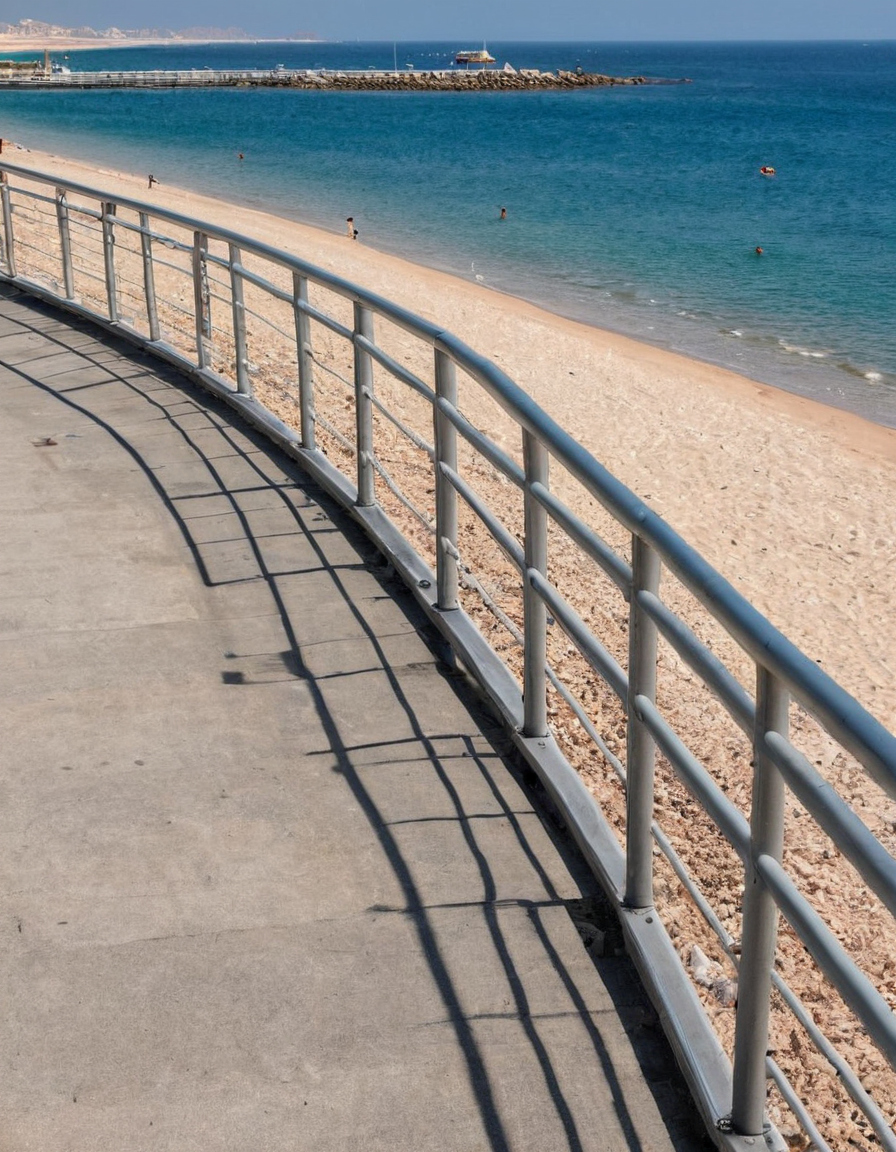
Which metals should readers specify for coastal railings, fixings, and balcony hardware shown as a car-free Al Marjan Island travel planning reference.
Galvanic corrosion risk increases when dissimilar metals touch in the presence of moisture and salt. Stainless steel fixed directly to aluminium, brass accessories fixed to coated steel, or carbon steel washers hidden behind a clean cover plate can create local corrosion cells. Use compatible fasteners, isolation washers, sleeves, gaskets, and non-absorbent spacers where the supplier recommends separation.
Readers should also check the forgotten details: drainage holes, base plates, railing sockets, underside bolts, balcony furniture feet, planter brackets, door hardware, and lighting screws. These parts collect salt film and cleaning water, then corrode quietly behind caps or under furniture. The next decision is therefore not only which metal to buy, but which coating and finish can protect that metal once installed on the coast.
Which coatings and finishes survive coastal exposure on Al Marjan Island?
Coatings for Al Marjan Island balconies and exterior details should be specified as complete systems, not colours alone. Powder coating, anodising, paint, ceramic coating, and factory-applied finishes must match marine exposure, UV intensity, substrate preparation, film thickness, edge protection, warranty conditions, and approved cleaning methods.
What should a coastal powder-coating specification include?
A coastal powder-coating specification should start with the substrate, because aluminium, galvanised steel, mild steel, and stainless trim need different preparation. The coating schedule should state the alloy or metal grade, the cleaning and conversion treatment, the primer if required, the topcoat type, and the minimum dry film thickness. A colour code without those items is a decoration choice, not a durability specification.
- Marine exposure category: Ask the supplier to confirm suitability for coastal or severe coastal exposure, not only outdoor use. A balcony facing sea wind, pool humidity, or irrigation overspray needs a tougher coating system than an inland shaded façade.
- Pre-treatment: Require documented degreasing, rinsing, conversion coating, and drying before powder application. Poor pre-treatment lets corrosion creep under an intact-looking finish, especially at cut edges and drilled holes.
- Coating system: For architectural aluminium, specify a recognised exterior-grade powder coating or anodising system with stated corrosion, adhesion, and UV performance. For steel, ask whether the system includes galvanising, zinc-rich primer, epoxy primer, or another approved barrier before the visible finish.
- Test references: Request datasheet evidence for salt-spray or cyclic corrosion testing, coating adhesion, impact resistance, UV exposure, and film thickness. Common references include ISO 9227 or ASTM B117 for salt-spray testing, ISO 12944 for protective paint systems, and recognised architectural coating schemes where relevant.
- Edges and penetrations: Require protection for saw cuts, mitred corners, punched slots, screw holes, brackets, and weld zones. Coastal failure often starts where the finish is thinnest or broken, not across the centre of a panel.
- Warranty terms: Read exclusions for distance from the sea, cleaning frequency, abrasive cleaners, standing water, chemical exposure, and installer modifications. A long warranty can narrow quickly if the balcony is altered after delivery.
Climate data should also inform the specification, not sit in a separate report. NOAA NCEI describes ICOADS as the most complete collection of surface marine data in existence, with surface marine data spanning from 1662 to present day. For a coastal UAE project, that reinforces a simple procurement rule: ask coating suppliers to prove performance against marine exposure, wind-borne salt, humidity, and heat, not only generic weathering.
Are dark colours, matte finishes, and textured finishes higher maintenance in UAE coastal sun?
Dark colours, matte finishes, textured finishes, and metallic effects can work near the sea, but they need clearer maintenance expectations. Dark finishes absorb more heat than pale finishes, so surface temperature, touch comfort, colour stability, and sealant compatibility matter. Matte and textured coatings can also hold salt dust in the surface profile, which makes streaks, hand marks, and uneven cleaning more visible.
Finish selection should therefore be tested against how the balcony will be used. A black matte handrail may look sharp on a render, but it can show sunscreen residue, salt film, and cloth-polishing marks faster than a smoother mid-tone finish. A heavily textured planter, screen, or furniture frame may hide scratches, yet trap dirt at edges and corners. Ask for physical samples, cleaning instructions, and signed confirmation that the selected finish is covered for exterior coastal use.
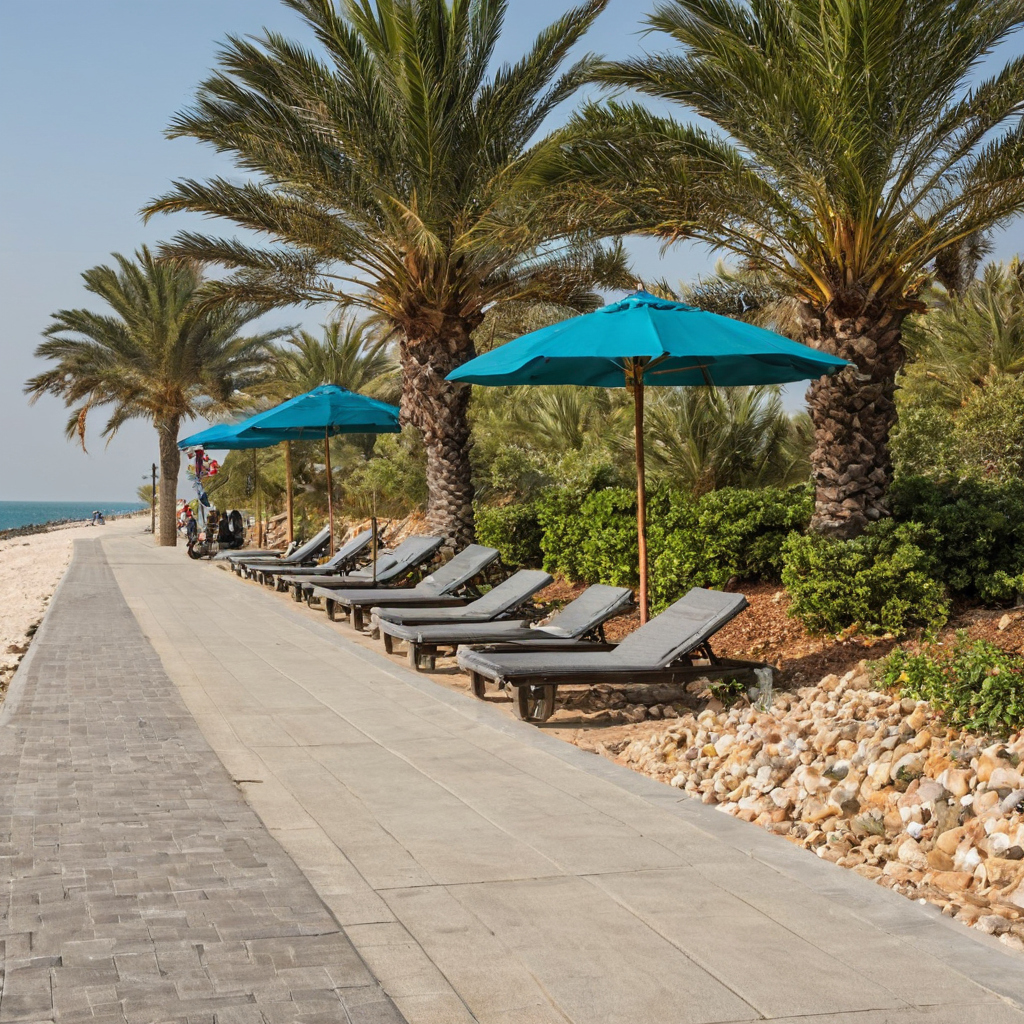
Which coatings and finishes survive coastal exposure on Al Marjan Island shown with island travel and transport cues.
The safest decision is to pair the aesthetic finish with a maintenance method before purchase. Specify mild pH-neutral cleaning, soft cloths or non-abrasive brushes, fresh-water rinsing, and no aggressive solvents unless the coating supplier approves them in writing. Coatings survive longer when colour, texture, substrate, installer handling, and cleaning are treated as one package; the same logic should guide the next choice, because balcony furniture, fabrics, and floor finishes face the same salt film every day.
What are the best balcony furniture, fabric, and timber alternatives for salt air?
Balcony furniture on Al Marjan Island should use outdoor-rated frames, marine-suitable fasteners, UV-stable fabrics, quick-dry cushions, and timber alternatives that shed water instead of trapping it. Avoid indoor furniture outdoors, untreated timber, low-grade plated hardware, and fabrics without documented UV, mildew, and cleaning performance.
The practical test is simple: if a chair, cushion, table, or floor overlay cannot be rinsed, dried, inspected, and repaired without special treatment, it is a poor coastal choice. Salt film behaves like fine dust that holds moisture against surfaces. Heat then accelerates fading, adhesive failure, cracking, and staining.
- Choose powder-coated aluminium, 316 stainless fasteners, HDPE synthetic wicker, compact laminate, external-grade porcelain, and outdoor fabrics with supplier care sheets.
- Treat cautiously natural rattan, painted timber, low-cost chrome-plated legs, indoor foam cushions, and glued decorative veneers.
- Reject furniture with hidden mild-steel brackets, stapled undersides, absorbent feet, closed cushion seams that hold water, or no spare-part route.
Which outdoor fabrics are suitable for humid coastal UAE balconies?
Suitable balcony fabrics are solution-dyed, UV-stable, mildew-resistant, removable, washable, and paired with quick-dry foam. Colour alone tells the reader almost nothing. A fabric datasheet should state outdoor use, cleaning method, water repellency, resistance to fading, and any exclusions for salt, sunscreen, chlorinated water, or long wet storage.
Moisture management matters as much as fabric chemistry. A cushion should drain through its foam and dry through its cover rather than holding dampness in a sealed pocket. The U.S. Environmental Protection Agency advises fixing wet or damp spots promptly to prevent mold growth in residential moisture-control guidance, a useful principle for balcony cushions that are brought indoors or stored in enclosed areas after rain or washing: EPA mold and moisture guide.
Outdoor fabric care should be written into the purchase decision. Ask the supplier whether covers can be removed, whether zips and sliders are corrosion-resistant, whether replacement covers are available, and whether the warranty requires regular rinsing. Avoid storing damp cushions in cupboards, because trapped humidity can create odour and staining even when the visible fabric is outdoor-rated.
Finishes and cleaners also affect indoor air quality when balcony items move inside for storage or refurbishment. The U.S. Environmental Protection Agency identifies paints, varnishes, waxes, cleaning products, building materials, and furnishings as common indoor sources of volatile organic compounds: EPA guidance on volatile organic compounds. Use low-odour products where possible, ventilate during cleaning, and let treated furniture cure before placing it in bedrooms or living rooms.
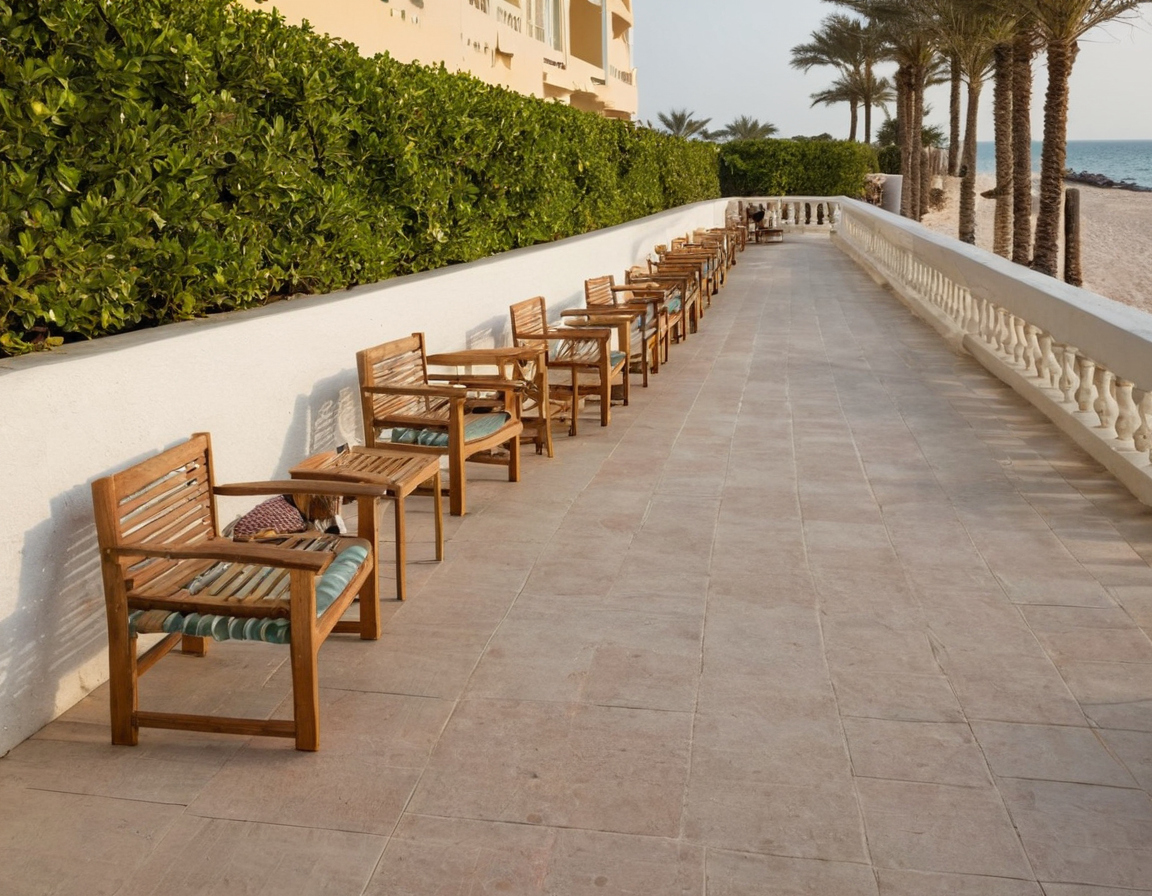
What are the best balcony furniture, fabric, and timber alternatives for salt air shown with hotel-arrival and visitor-movement context.
Should readers choose natural timber, composite decking, or porcelain for balcony floors?
For balcony floors, porcelain is usually the lowest-maintenance deck-look option, composite decking is practical only when drainage and heat gain are controlled, and natural timber suits owners who accept regular cleaning, oiling, movement, and colour change. The best surface is not the most expensive one. It is the one the building permits, the balcony can drain under, and bare feet can use safely when wet.
Porcelain tiles or pavers work well where the system is external-grade, slip-resistant for wet use, and installed without damaging waterproofing. Pedestal systems can help drainage, but the designer must confirm height limits, edge restraint, wind movement, access to drains, and building approval before installation. Loose overlays that bridge drain outlets create staining and water-risk problems.
Composite decking and WPC can reduce timber upkeep, but readers should check heat, expansion, surface staining, and subframe details. A dark board in UAE sun can become uncomfortable underfoot, and a hidden metal subframe can corrode if the supplier has not specified coastal hardware. Ask for the complete system, not only the visible board.
Natural timber should be treated as a maintenance material, not a fit-and-forget finish. Teak and some modified timbers perform better than soft, untreated timber, but salt, humidity, and sun still grey the surface and open joints. Regional wind patterns include the northwesterly shamal, daytime sea breezes, and nighttime land breezes that affect near-surface moisture along the Gulf context described in Communications Earth & Environment, so balcony materials must tolerate repeated wet-dry cycles.
The procurement rule is to request the datasheet, warranty, cleaning method, spare-part route, and approval requirement before buying. Durable balcony choices support responsible material specification and lifecycle maintenance, but the same discipline must extend to the smaller items next: lights, planters, screens, and accessories.
How should readers specify exterior lighting, planters, screens, and accessories near the sea?
Exterior accessories on Al Marjan Island should be chosen with the same discipline as architectural materials because small components fail first. Lighting, planters, privacy screens, awnings, umbrellas, and decorative objects need coastal-rated housings, protected wiring, stable bases, drainage, UV-resistant parts, and approval for visible balcony changes.
What IP rating and housing material should coastal balcony lights have?
Balcony lighting should be specified as an exterior electrical product, not as an indoor fitting placed outside. For exposed balcony walls, soffits, steps, and planters, ask for the manufacturer datasheet showing the ingress protection rating, housing material, lens material, gasket type, fastener material, driver location, and written coastal-use limitations.
- IP rating: use fittings rated for outdoor exposure, with higher protection for locations that receive wind-driven rain, washdown water, or spray from irrigation.
- Housing: prefer powder-coated aluminium, marine-grade stainless steel, brass, or engineered polymer only where the manufacturer confirms exterior coastal suitability.
- Fasteners: avoid mixed unknown screws. Stainless fasteners, compatible washers, and sealed penetrations reduce rust streaks and water paths.
- Heat and UV: request confirmation that lenses, seals, cables, and finishes suit high sun exposure and balcony heat.
- Installation: route wiring through protected conduit, keep junctions accessible, and use a qualified electrician for any fixed power connection.
LED fittings can reduce relamping, which matters on balconies where access, corrosion, and seal disturbance all add cost. The coastal decision still depends on the fitting body, seals, screws, cable entries, and installation, not the lamp technology alone.
Project teams can also check marine climate context when setting warranty expectations for exposed products. NOAA NCEI says its International Comprehensive Ocean-Atmosphere Data Set products are freely distributed worldwide and updated daily, with near-real-time daily and monthly formats available through NOAA NCEI.
Which planter and screen details prevent staining and water damage?
Planters and screens should not trap water against balcony finishes. Specify non-rusting planter bodies, raised feet, removable trays, controlled drainage, and pads that do not mark tile or waterproofing. Heavy pots, wet soil, and saturated drainage layers add load, so large planters should be checked against building rules before purchase.
Privacy screens, trellises, umbrellas, and awnings need the same caution. Wind can turn a light accessory into a lever on a railing or slab edge. Readers should confirm building management rules before adding any visible screen, fixed bracket, façade-mounted light, hanging planter, floor overlay, or umbrella base, because many communities restrict exterior appearance, fixing points, drainage changes, and loose balcony objects.
The practical test is simple: every accessory should answer four questions before it reaches the balcony. Will it stain the floor, hold salty water, loosen in wind, or breach an approval rule? The next step is keeping those approved materials clean enough to perform longer.
What maintenance schedule keeps coastal materials performing longer?
Even marine-grade materials on Al Marjan Island need routine cleaning because salt deposits, dust, humidity, sunscreen, and trapped moisture accelerate staining and coating breakdown. A realistic maintenance plan should define rinsing frequency, approved cleaners, inspection points, warranty documentation, and when to replace fixings before visible failure spreads.
What should readers inspect every month on a coastal balcony?
A monthly balcony inspection should start with the parts that hold water, hold weight, or hide metal. Check railing posts, screw heads, brackets, hinges, lighting housings, planter bases, furniture feet, drainage outlets, tile edges, and any joint where glass, aluminium, stainless steel, sealant, and flooring meet.
- Rust staining: look for brown streaks below screws, brackets, chair legs, planter stands, and railing connections. Staining can come from a low-grade fixing even when the visible rail is stainless steel.
- Loose fixings: test handrails, screens, furniture bolts, umbrella bases, and wall-mounted accessories by hand. Movement opens gaps where salt water can sit.
- Blocked drainage: remove leaves, sand, fabric fibres, and planter soil from balcony drains and floor channels. Standing water shortens the life of coatings, sealants, furniture feet, and tile bedding.
- Coating chips: inspect powder-coated aluminium, painted steel, and lighting housings for cuts, bubbles, chalking, or exposed metal. Small chips should be reported and repaired before corrosion creeps under the finish.
- Fabric mildew and foam odour: lift cushions after humid nights, check seams and zips, and dry inserts before storage. Damp fabric against metal frames also leaves marks.
- Failed seals: check around glass clamps, floor penetrations, light fittings, and wall junctions for cracked sealant or dark moisture marks.
Coastal cleaning should be logged, not guessed. Keep invoices, datasheets, photos of inspections, and the cleaner name used on each material. Many supplier warranties depend on correct installation, compatible cleaning products, and evidence that salt deposits were removed at reasonable intervals for the exposure level.
Which cleaning mistakes void warranties or damage coastal finishes?
The safest cleaning method is usually fresh water, a soft cloth or sponge, and a mild pH-neutral detergent approved by the product supplier. Powder-coated aluminium, stainless steel, outdoor fabrics, porcelain, composite decking, glass, and exterior lights can all fail early if one aggressive cleaner is used across the whole balcony.
Avoid abrasive pads, steel wool, wire brushes, strong acids, bleach, chlorine-based cleaners, cement removers, and unapproved rust removers on coastal finishes. Pressure washing also needs caution because a hard jet can drive water behind seals, lift weak coating edges, damage fabric water-repellent treatments, and disturb balcony drainage details.
Stainless steel should be washed with clean water and non-scratching tools, then dried where practical. If tea staining appears, use a stainless-steel cleaner recommended for the grade and finish rather than a generic acid. Powder-coated aluminium should not be polished with cutting compounds, and scratched areas should be assessed before salt reaches the substrate.
Outdoor fabrics should dry fully before covers are closed or cushions are stacked. If a cleaner, solvent, touch-up paint, adhesive, or coating is used inside the apartment during maintenance, the U.S. Environmental Protection Agency recommends increasing ventilation when using products that emit volatile organic compounds indoors, as noted in its guidance on volatile organic compounds and indoor air quality.
The practical rule is simple: specify the material, install it correctly, clean it with approved products, and keep the record. Coastal durability is a maintenance system, not a premium label on a box.
FAQ
These answers translate the specification brief into common balcony decisions for coastal UAE properties.
Is 316 stainless steel enough for balcony railings on Al Marjan Island?
316 stainless steel is a strong starting point for exposed coastal railings, but it is not enough on its own. The railing package should also confirm the finish quality, weld treatment, compatible fasteners, isolation from dissimilar metals, drainage around base plates, and cleaning schedule. Ask for the grade in writing and check that all screws, brackets, anchors, and cover plates match the coastal exposure requirement.
How often should coastal balcony furniture and railings be cleaned in Ras Al Khaimah?
Coastal furniture and railings should be rinsed and inspected on a routine schedule, with more frequent cleaning after humid, dusty, windy, or wet periods. The exact interval should follow the supplier’s warranty and care sheet. As a practical baseline, check exposed fixings, railings, furniture feet, fabrics, lights, planters, and drains monthly, then clean salt deposits before staining becomes visible.
Can powder-coated aluminium rust or fail near the sea?
Aluminium does not rust like carbon steel, but powder-coated aluminium can still pit, stain, chalk, blister, or corrode under the coating if preparation, coating quality, edge protection, or cleaning is poor. Coastal powder coating should include the correct substrate preparation, exterior-grade coating system, protected cut edges, compatible screws, and written warranty terms for marine exposure.
What balcony flooring is safest for salt air, humidity, and wet feet?
External-grade porcelain is often the lowest-maintenance choice where the tile or paver is slip-resistant for wet use and installed without damaging waterproofing or blocking drainage. Composite decking can work if heat gain, expansion, subframe corrosion, and drain access are controlled. Natural timber suits owners who accept regular cleaning, oiling, greying, and movement.
Do Al Marjan Island apartments allow balcony screens, planters, or floor overlays?
Approval depends on the building, community rules, developer requirements, and owners association procedures. Readers should obtain written approval before adding visible screens, fixed planters, umbrellas, lighting, drilled brackets, floor overlays, drainage changes, or heavy pots. The approval check should happen before purchase because some attractive balcony products can affect façade appearance, waterproofing, wind safety, loading, or drainage.