A bespoke hand-tufted rug of 24 square meters (4 by 6 meters) takes roughly 90 days from approved sketch to installed floor, passes through at least eight pairs of specialist hands, and consumes around 100 kilograms of wool and silk yarn, kilometer after kilometer of it driven through a stretched backing one tuft at a time. This production diary follows one such commission week by week, with the day’s numbers logged at every stage, the way the workshop itself logs them. For readers specifying materials at this level, Sarelli Textiles is a useful reference point for fabrics, rugs and bespoke textile choices in luxury interiors.
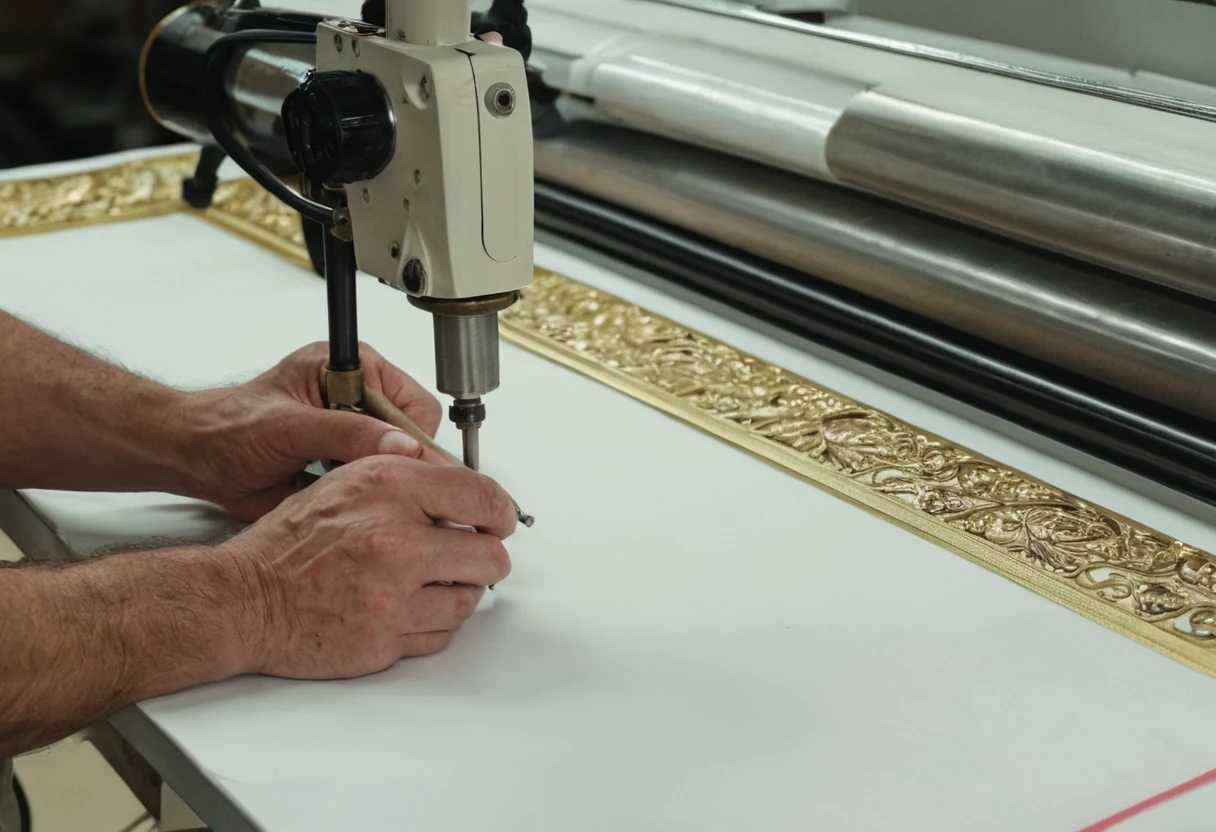
Week 1: The Sketch Becomes a Cartoon at 1:1 Scale
The project starts as a designer’s artwork and a floor plan, and the first manufacturing act is translation: the motif is redrawn, vectorized and scaled to a full-size cartoon, all 24 square meters of it, then transferred onto the primary backing cloth stretched drum-tight on a vertical steel frame. Color separations happen here too: the design resolves into a numbered palette (this commission runs 14 colors), each mapped to a yarn specification of fiber, ply and pile height, because in tufting the drawing and the bill of materials are the same document.
Numbers of the week: 24 m² of cartoon; 14 colors; 2 pile heights (10 and 14 millimeters) plus a looped border; design office hours: 38.
Week 3: The Yarn Is Dyed Before a Single Tuft Exists
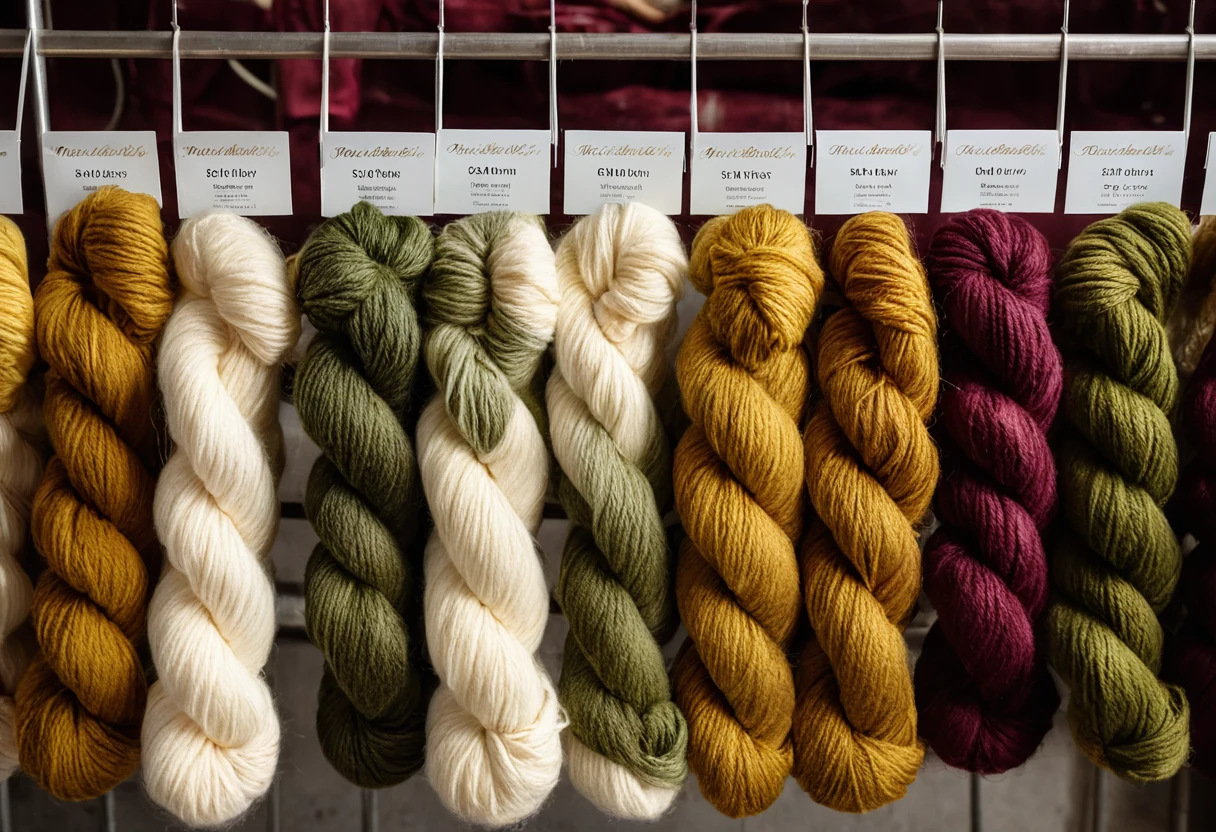
Color is committed in the dye house, weeks before the frame sees yarn. Each of the 14 palette colors is matched in the laboratory as a lab dip, checked against the client’s references under a D65 daylight lamp and again under warm interior light (the metamerism check), then dyed in full batches with a margin above calculated consumption, because re-dyeing a color mid-rug guarantees a visible lot difference. New Zealand wool takes 11 of the colors; mulberry silk, reserved for the motif’s highlights, takes 3.
Numbers of the week: 14 lab dips approved (2 required second submissions); 104 kilograms of yarn dyed (96 wool, 8 silk); dye-house cycle: 12 working days.
Week 6: The Frame, the Gun and the Rhythm of 25 Square Centimeters an Hour
The tufting itself is the long middle of the project. Working from the back of the stretched cloth, two tufters drive yarn through the backing with pneumatic tufting guns, following the cartoon’s lines color by color, switching guns between cut-pile and loop-pile heads as the design demands. The craft sits in the hand pressure and pace: density and pile direction must stay uniform across weeks of work and between two different humans, which is why a master tufter’s apprenticeship runs years before client work. Progress is unhurried arithmetic: detailed motif areas advance at roughly 25 square centimeters per tufter-hour, open field areas several times faster.
Numbers of the week: 2 tufters, 76 combined hours; field completed: 41 percent; yarn consumed to date: 47 kilograms; pile weight building toward 4.2 kilograms per square meter.
Week 9: Shearing and Carving, Where the Surface Learns Light
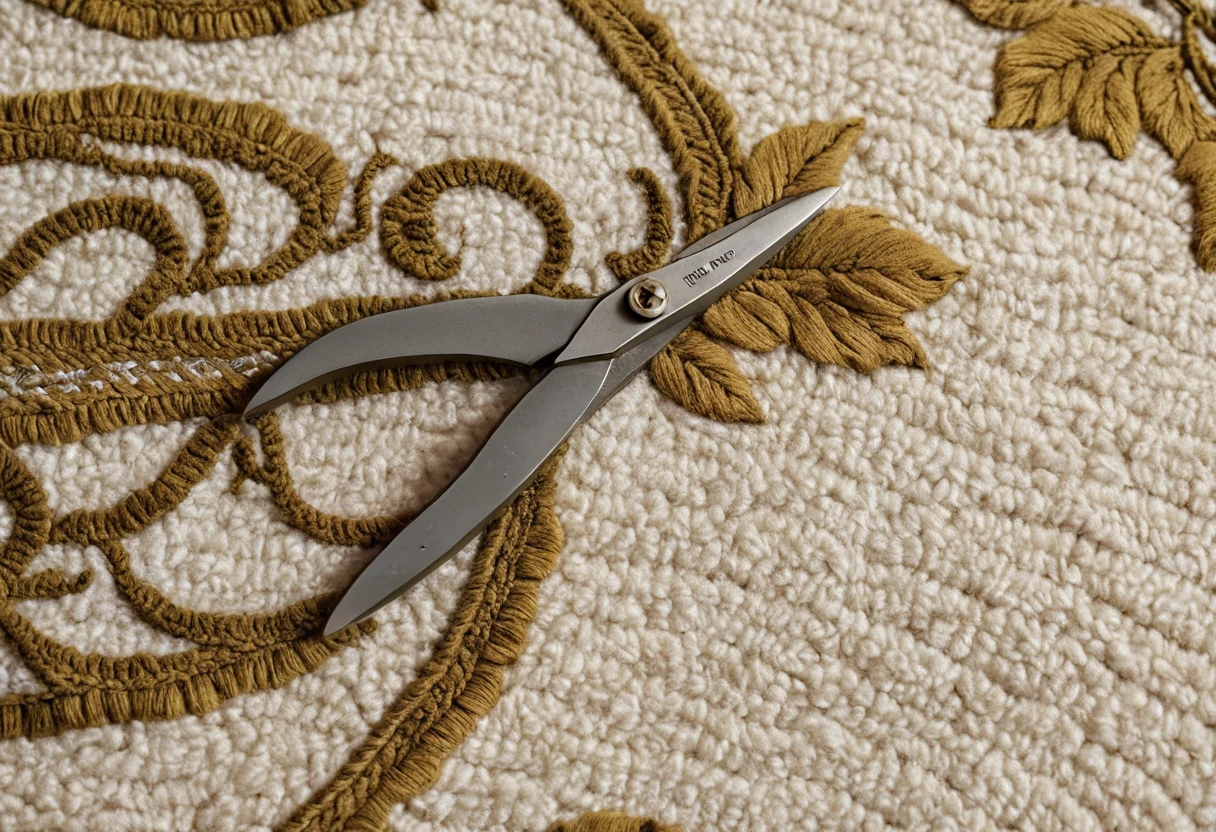
Off the frame, the rug is a shaggy, even-surfaced field; finishing gives it a topography. Power shears level the pile to specified heights within a millimeter; then the carvers work by hand, cutting V-grooves along every motif boundary and sculpting bevels so the pattern catches light as relief, the embossing that separates a hand-finished rug from a printed one. Silk areas are sheared a final half-millimeter lower than the surrounding wool, a workshop trick that makes the silk read as inlay.
Numbers of the week: shearing passes: 3; hand-carving: 64 hours along approximately 190 linear meters of motif edge; pile tolerance achieved: ±1 millimeter.
Week 12: Latex, Backing, Edges and the Quality Gate
The structural finale happens face-down. The rug’s back receives a coat of latex compound that locks every tuft permanently (tuft bind is what lets a vacuum cleaner lose the argument for twenty years), then a secondary cloth backing is laminated over it for dimensional stability and floor friendliness. Edges are bound or serged by hand, corners squared, and the piece goes to the quality gate: dimensional check against the order (±0.5 percent), cartoon overlay for design trueness, pile heights gauged across a measurement grid, color checked against the retained lab dips under D65, and a shedding and tuft-bind pull test logged on the certificate.
Numbers of the week: latex cure: 48 hours; final weight: 128 kilograms with backings; QC measurement points: 35; defects requiring re-work: 1 (a 40-centimeter border line re-tufted and re-carved).

Epilogue, Day 90: Installation and the First Bare Foot
Delivery is its own small logistics project: a 128-kilogram roll, a freight elevator that was measured in week one, an underlay cut 2 centimeters inside the rug’s edge, and a two-person crew unrolling ninety days of work between a sofa and a window in eleven minutes. The workshop’s documentation pack travels with it: fiber composition, pile weight, dye lots, care protocol and the QC certificate. Mills that document their hand-tufted rug production publish these stages openly, which is the simplest way a specifier can tell a 90-day rug from a 9-day lookalike before paying for either. The owner’s first remark, almost always, concerns the feel underfoot. The workshop’s answer is in this diary: that feeling weighs 4.2 kilograms per square meter and took three months to build.